


Oláh Jolán Salgótarján, 1932 - 2005, Salgótarján



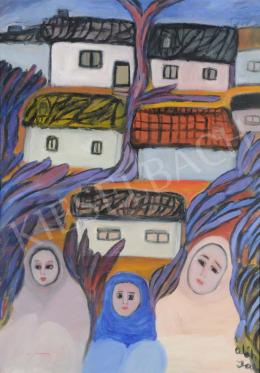
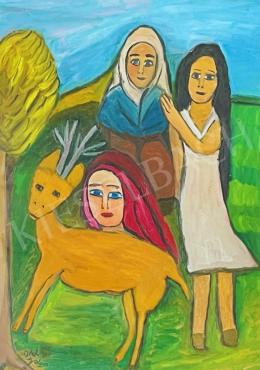
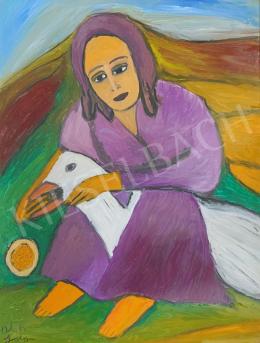
She spent most of her life in the city, her creative work began and flourished here. She became known as a painter, but she also worked as a sculptor. His first exhibition is also linked to his hometown. His art was fundamentally determined by his departure from the gypsy settlement in Pécskő-domb, Salgótarján, the deprivation, and the hard physical work she had to do to make a living. His paintings show his dreams, the everyday life of his life and family in a captivating way. They are mostly suggestive portraits, which reflect the personality of a person who suffered a lot and a sensitive artist, as well as the diversity of emotions. His recurring motifs are expressive faces and gazes, characteristic figures, trees, birds, small houses. Despite the certain color scheme, his paintings exude gentleness and tranquility. She has won several international and domestic awards for Roma fine art, he has had exhibitions all over the country, and he has also appeared abroad on numerous occasions. Her works can be found in the collections of the Gypsy House, the ROMART Foundation, the Kecskemét Museum of Naive Artists and the Hungarian Cultural Institute, in the permanent exhibition of the Roma Parliament and in private collections. In 2004, the Nógrád County Association of Gypsy Minority Representatives and Advocates and the Nógrád County Equal Opportunities Coordination Office awarded her the Equal Opportunities Award on the Day of Minorities in recognition of her work. On March 12, 2007, on the 75th anniversary of her birth, a memorial plaque was unveiled in Salgótarján in her honor.
Jolán Oláh is a unique representative of the history of Hungarian fine arts, the first woman among Hungarian Roma artists to gain fame not only within her narrow homeland, but also throughout the world.
 Facebook
 Instagram
 Pinterest
 Youtube